
Allergy — Breathe Better. Live Better.
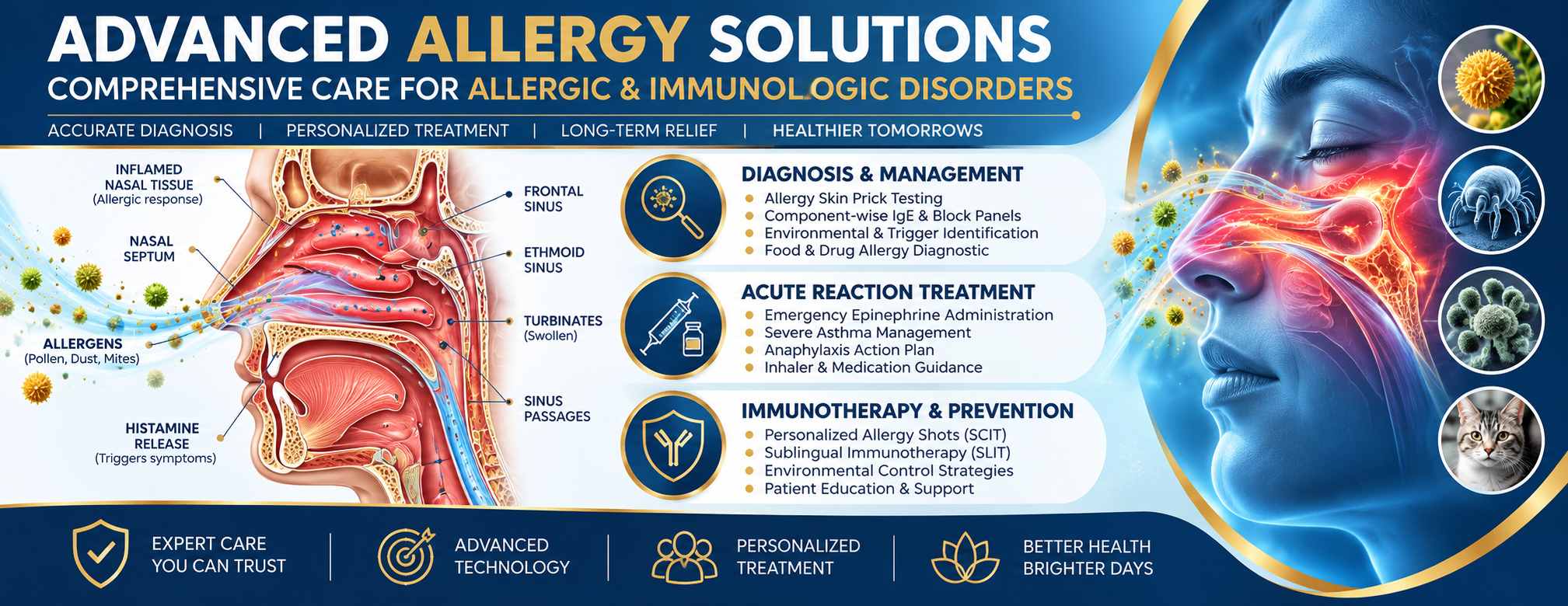
Allergies can significantly affect daily life, causing persistent sneezing, runny or blocked nose, nasal and throat itching, watery eyes, post-nasal drip, recurrent sinus symptoms and disturbed sleep. At the Department of ENT, Fortis Hospital, Bannerghatta Road, comprehensive evaluation and personalised management are provided for allergic disorders affecting the nose, sinuses, throat and upper airway in both adults and children.
A detailed clinical assessment helps identify symptoms, environmental exposures, possible triggers and their impact on everyday activities. Where appropriate, allergy testing is recommended to identify the allergens responsible for the patient’s symptoms and help guide treatment.
Conditions Treated
- Allergic Rhinitis
- Nasal Allergy
- Allergic Disorders of the Nose and Sinuses
- Allergic Throat Symptoms
- Upper Airway Allergies
- Post-Nasal Drip Related to Allergy
- Allergy-Related Nasal Blockage
- Environmental Allergies
Allergy Diagnosis & Testing
- Skin Prick Testing — A minimally invasive test used to identify sensitivity to common environmental allergens.
- Component-Resolved Diagnostics (CRD) — An advanced allergy testing approach that provides more detailed information about sensitisation to specific allergen components and can support personalised treatment planning.
Allergy Treatment & Management
- Allergen avoidance and trigger identification
- Environmental control measures
- Medical treatment for allergy symptoms
- Sublingual Immunotherapy (SLIT) for suitable patients with persistent allergic symptoms
Sublingual Immunotherapy (SLIT)
For selected patients with persistent allergic symptoms, Sublingual Immunotherapy involves administering carefully selected allergen extracts under the tongue. The treatment aims to modify the body’s allergic response and provide longer-term control of allergy symptoms.
Treatment is individualised according to the patient’s age, symptoms, allergy profile and clinical requirements. The overall goal is to identify relevant triggers, control symptoms and provide effective long-term allergy management so patients can breathe better, sleep better and live better.